
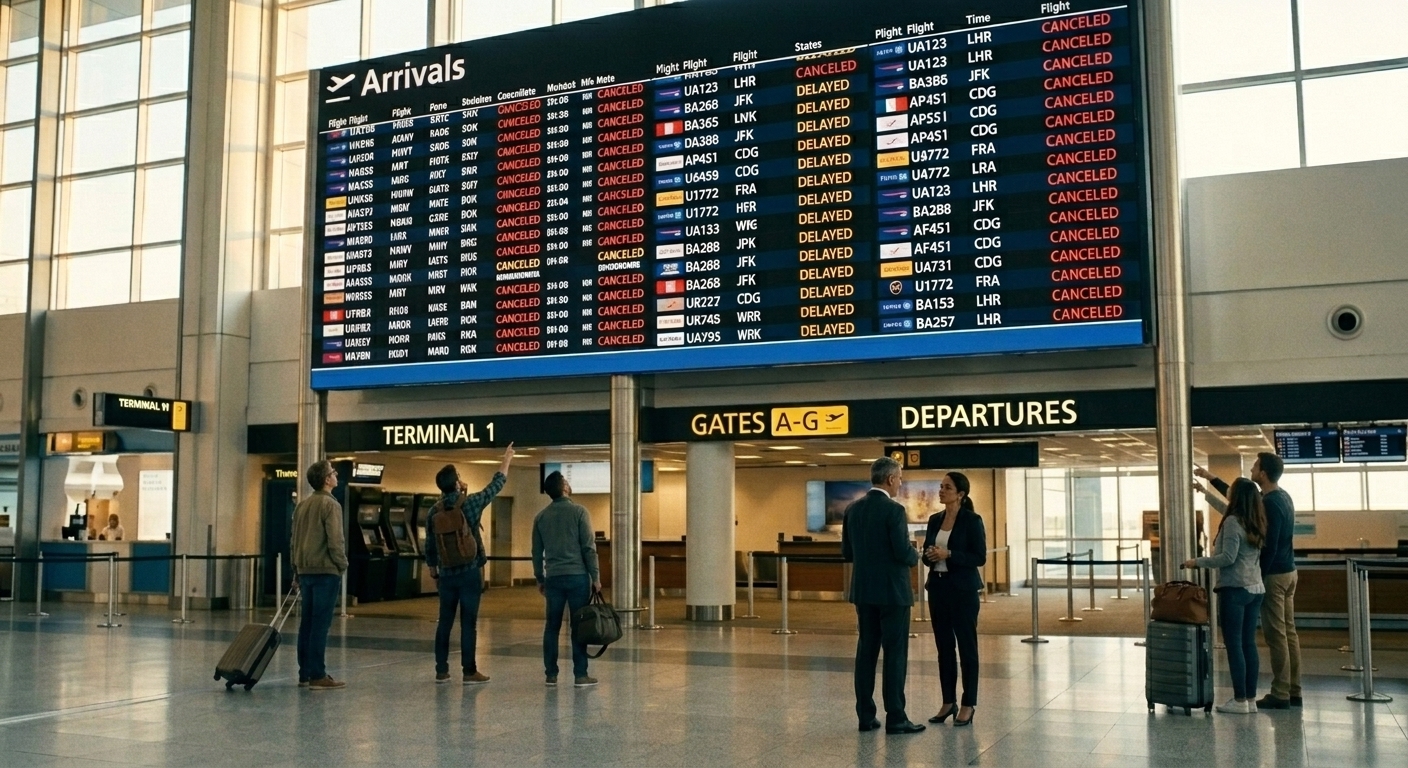
Airlines are cutting flights. Jet fuel costs are up, the war in the Middle East is straining supplies, and the effects are already showing up in booking systems.
If you’re flying between the US and France this summer, or anywhere in Europe, it’s worth knowing your options before you need them.
The scale of it is real. Lufthansa Group announced it’s cutting 20,000 short-haul flights across its network through October. Unlike weather cancellations, which tend to hit without warning, these are being made days or weeks out, which at least gives you time to adjust.
The timing doesn’t help. “These pressures are arriving at a time when summer travel demand is ramping up, with major events such as the World Cup expected to put additional strain on airports,” said Eric Napoli, chief legal officer at AirHelp, a company that helps travelers recover compensation for flight disruptions.
If your flight gets canceled, here’s what to do:
- Check the airline app first. For US carriers, that’s usually the fastest path to rebooking. Non-US carriers tend to have fewer digital tools, so try multiple channels: customer service lines, the airport desk, whatever gets you a person on the other end.
- Know your refund rights. Airlines must offer either a refund or a seat on the next available flight. In the US, if your flight is canceled and you no longer want to travel, the airline owes you a refund regardless of why the flight was canceled. They’ll push travel credits. You don’t have to take them.
- Don’t take the first rebooking option. Check other flights, routes, or nearby airports before you commit. There may be a faster or more convenient way to reach your destination if you take five minutes to look.
- If the rebooking doesn’t work for you, find your own. If the airline’s alternative isn’t for several days, you can look for other options and request a refund instead. Just know you may need to cover any fare difference up front, and reimbursement isn’t guaranteed.
- Know that EU protections still apply if you’re flying out of France. EU passenger rights are strong, and fuel shortages don’t get airlines off the hook. “While airlines are citing fuel shortages as a reason for upcoming cancellations, travelers need to know that this does not automatically waive their rights,” Napoli said.
- Document everything. Boarding passes, cancellation notices, screenshots of app updates, and notes from phone calls. Ask the airline for written confirmation of the disruption and the stated reason. You’ll want it if you need to file a claim later.
- Be calm and be kind at the counter. Agents dealing with a wave of cancellations will remember who was decent to them. It genuinely helps.
A few things worth doing before you travel: book directly with the airline when you can. Book earlier flights in the day when possible so you have more options if something goes wrong. Download the app Flighty. In some cases, it sends cancellation alerts before the airline does. (We’ve been burned before by not doing this. Never again.)
We’ve got a transatlantic summer ahead of us, and we’ll be watching this situation closely.



1 Comment